
Quick answer
The main lesson from school bus accidents in India is that many are preventable: over-speeding, route deviation and a communication blackout after an incident recur again and again. GPS tracking addresses all three with real-time speed alerts, geofenced routes and exact location data, and CBSE's transport precautions already cap school bus speed at 40 km/h.
- Over-speeding is the traffic-rule violation linked to the most road accidents in MoRTH data, so speed alerts are the highest-impact fix.
- Geofencing flags any detour from the approved route within minutes, before a bus reaches a hazard.
- After an incident, live location and route replay replace panic and silence with precise information for parents and police.
June 18, 20267 min readRoad Safety
- 4,61,312Road accidents reported in India in 2022 (MoRTH)
- 1,68,491Lives lost in those accidents (MoRTH, 2022)
- 40 km/hSpeed cap for school buses in CBSE's transport precautions
- #1Over-speeding: the traffic-rule violation behind the most National Highway accidents (MoRTH, 2021)
Sources: MoRTH via PIB, 2023; MoRTH via PIB, 2023; CBSE Circular 01/2012.
1. India's School Bus Safety Record
India's road safety statistics are grim overall: the Ministry of Road Transport and Highways reports that 4,61,312 road accidents in 2022 killed 1,68,491 people and injured 4,43,366 (MoRTH via PIB, 2023). School transport adds a particularly painful dimension because the victims are children who have no say in how the vehicle is operated.
More troubling: many school transport accidents involve at least one preventable contributing factor — over-speeding, unauthorized routes, driver fatigue, or vehicle defects that a monitored system would have flagged.
2. Seven Common Failure Scenarios — What Goes Wrong
The scenarios below are illustrative composites of failures that recur in school transport, not reports of specific incidents. Each shows where a monitoring gap turns a problem into a crisis.
Scenario 1 — Overloaded van on an unofficial route:
A school van carrying far more children than its seating capacity takes an unapproved shortcut and overturns after being overtaken by a truck. The van has no tracking, and nobody at the school can be reached for a long time after the accident.
Scenario 2 — Driver medical emergency:
The driver suffers a heart attack at the wheel. There is no SOS system and no way for the children to alert anyone; the school only finds out when a passer-by calls the police.
Scenario 3 — Speeding to make up lost time:
A driver running late speeds on a familiar stretch and rear-ends a stationary truck. GPS speed logs would have shown a pattern of over-speeding on that stretch long before the crash.
Scenario 4 — Driver fatigue:
A van driver who worked a night shift the previous day falls asleep on a highway and hits a road divider. Fatigue management is impossible without trip time tracking.
Scenario 5 — Missed drop-off:
A young child gets off without the driver noticing and walks home alone through traffic; the school learns of it hours later. A digital stop-check would have flagged the missed drop immediately.
Scenario 6 — Unauthorised shortcut in the monsoon:
The driver takes a shortcut through a waterlogged road and the bus stalls with children inside. Parents have no idea where the bus is. A GPS geofence would have flagged the route deviation as soon as it began.
Scenario 7 — Unreported minor collision:
The bus has a minor collision at a crossing and the driver carries on without reporting it. Parents notice bruises in the evening and management knows nothing. GPS route replay would show the exact location and time of impact.
3. The Common Thread in These Scenarios
Across all seven scenarios, three factors recur consistently: over-speeding, route deviation, and communication blackout after an incident. All three are directly addressable by GPS tracking technology available today at an affordable monthly cost for any school.
4. Speed Monitoring: The Biggest Preventable Factor
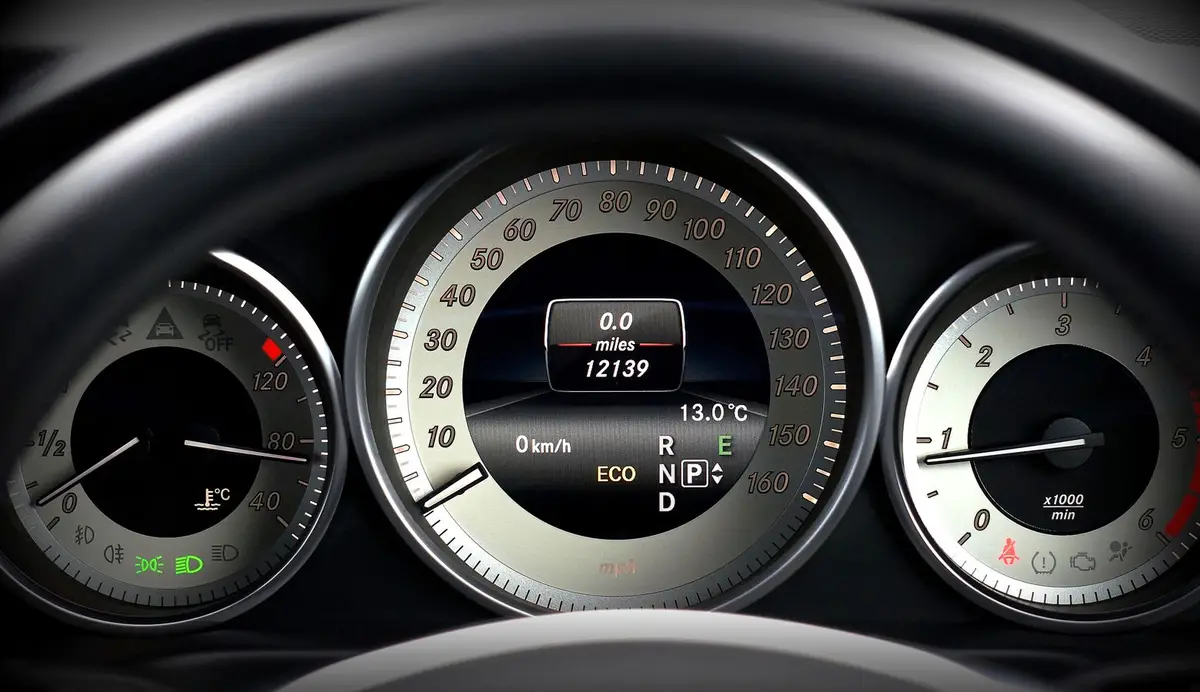
Over-speeding is the traffic-rule violation linked to the most road accidents in MoRTH data: on National Highways in 2021 it was involved in 95,785 accidents and 40,450 deaths, far more than any other violation (MoRTH via PIB, 2023). GPS tracking provides real-time speed alerts — the school admin dashboard shows speed in real time, and the system can be configured to send an immediate alert (WhatsApp/SMS) if any bus exceeds the preset limit, for example 30 km/h in residential lanes and never more than the 40 km/h cap that CBSE's transport precautions, 2012 set for school buses.

Drivers who know their speed is logged and reviewed have a strong reason to drive more carefully.
5. Route Compliance Monitoring
Geofencing technology allows schools to define the approved route corridor. Any deviation — even 500 metres off-route — triggers an immediate alert to the admin. In the monsoon-shortcut scenario (Scenario 6), the detour would be flagged within minutes of starting, long before the bus reached the flooded section.
6. Post-Accident Response With GPS
When an accident does happen despite all precautions, GPS data transforms the response: the school knows the exact location immediately, can contact emergency services with coordinates, and can notify parents with precise information rather than panic and silence. The route replay feature — available in SchoolTrack — shows every second of the bus's journey with speed data, enabling schools to file accurate accident reports and cooperate fully with police investigations.
No system can eliminate all risk. But GPS tracking can eliminate the information vacuum that makes accidents more deadly and longer to respond to.
Sources
- MoRTH — Road Accidents in India 2022, release via PIB (2023)
- MoRTH — Violation of traffic rules on highways, Rajya Sabha reply via PIB (2023)
- CBSE — Circular No. 01/2012, transport precautions added to Affiliation Bye-laws (2012)
Frequently Asked Questions
What's the most common cause of school bus accidents in India?
Are school buses required to have speed limiters?
Does GPS tracking actually speed up emergency response after an accident?
What's the single biggest preventable factor across these scenarios?
DVM Techno Team
School Bus Tracking Software experts based in Jhajjar, Haryana. SchoolTrack — India ka sabse affordable GPS tracking solution for schools. No hardware, no setup fee, 24-hour go-live.
Related Articles
SchoolTrack — India's Most Affordable School Bus GPS
No hardware cost. No setup fee. 24-hour go-live. The driver's phone becomes the GPS tracker.