
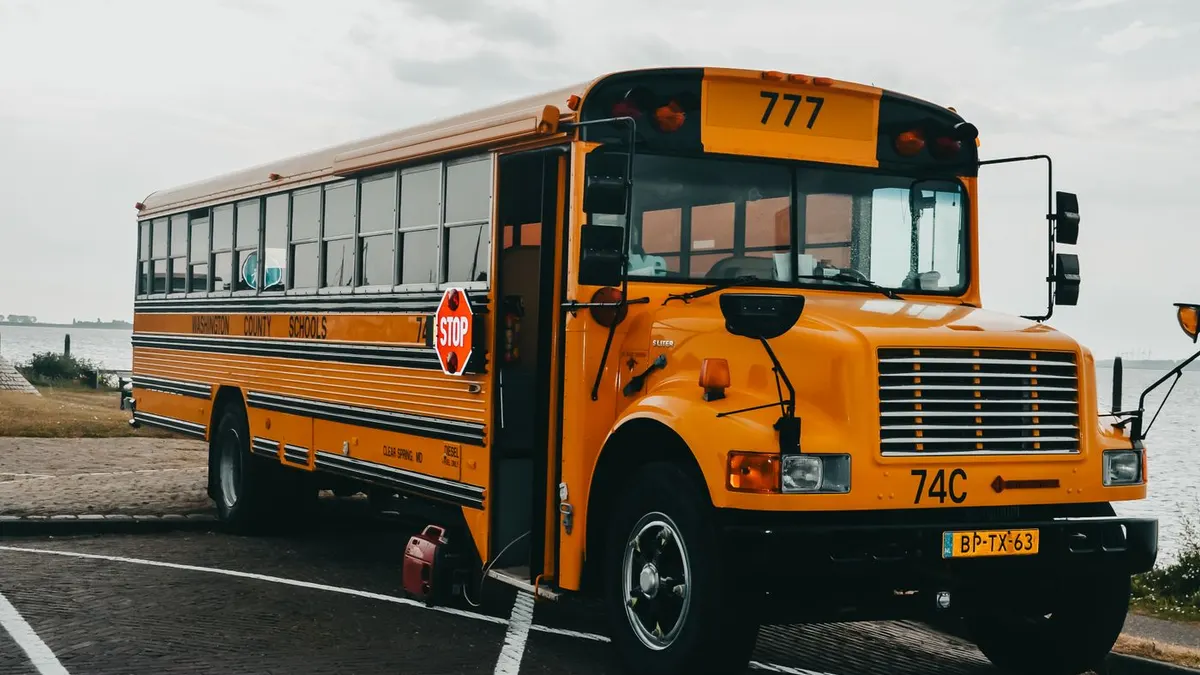
Quick answer
To choose a school bus tracking app in India, insist on location updates every 15–30 seconds, WhatsApp or SMS alerts that need no app, geofenced arrival alerts, offline data storage and a usable admin dashboard. Get every hidden cost in writing, check local support and references, and run a free two-week trial on two or three buses before signing.
- RFID attendance, in-bus cameras and live video are useful extras, but location updates and alerts should work reliably first.
- Ask who pays for SIM data, device replacement, onboarding and per-parent accounts before comparing subscription prices.
- Walk away from vendors with no references, no free trial, long lock-in contracts or email-only support.
June 29, 20268 min readSchool Bus Tracking
- 15–30 secLocation refresh interval to insist on
- 2 weeksMinimum free trial, run on 2–3 buses before signing
- WhatsAppAlert channel that avoids asking parents to install another app
1. Why Most Schools Choose Wrong
Many Indian schools invest in school bus tracking software — and quietly abandon it within months. The reason is almost never cost. It's almost always a mismatch between what was promised in the sales demo and what actually works day-to-day in Indian conditions.
Poor app design, servers that go down during morning rush hour, no local support, parents who can't figure out the interface — these are the real killers of GPS tracking programs in schools.
This guide gives you a structured framework to evaluate any school bus tracking solution before you commit.
2. Five Must-Have Features
Real-time location updates (under 30 seconds): If the bus location refreshes every 2–5 minutes, it's not real-time. Insist on 15–30 second refresh rates. Anything slower defeats the purpose of live tracking.
WhatsApp / SMS alerts — without an app: Indian parents don't want to install yet another app. The best systems push arrival/departure alerts directly to WhatsApp. If the vendor requires parents to download a dedicated app, expect low adoption rates.
Geofencing with automatic notifications: When the bus enters within 500 metres of a stop, parents should receive an automatic message. This removes the need for parents to monitor an app screen continuously.
Offline data storage: India has mobile signal dead zones on rural roads, underpasses, and near certain industrial areas. The GPS device must store trip data locally and sync when connectivity returns. Verify this in your trial.
School admin dashboard with trip reports: The transport coordinator needs daily route completion reports, speed violation logs, and the ability to add/remove stops. If the admin panel is clunky, the system will be abandoned.
Choosing the right school bus tracking app for Indian schools
3. Three Features That Are Nice But Not Critical
Student RFID attendance: Useful but expensive. You pay for a card for every student plus a reader on every bus. For most schools, GPS geofencing (which marks a child as "onboard" when the bus is at their stop) provides most of the value at a fraction of the cost.
In-bus camera integration: Adds significant cost. Evaluate only after GPS tracking is working reliably for 3 months.
Live video streaming: Bandwidth-heavy and rarely used in practice. Focus on location and alerts first.
4. Hidden Costs to Watch For
The monthly subscription price is rarely the full cost. Watch for:
- SIM card charges: Each GPS device needs a SIM. Who pays the monthly data charges? (Get this confirmed in writing.)
- Hardware replacement policy: GPS devices get stolen or damaged. What's the replacement cost and who bears it?
- Onboarding fee: Some vendors charge a separate fee to set up routes, add parents, and train staff. Get this in writing upfront.
- Per-parent charges: Some vendors charge per parent account. If a bus has 40 students with 2 parents each, your "50-bus" plan suddenly becomes much more expensive.
School bus GPS tracking software features comparison
5. Questions to Ask the Vendor
Ask these before signing:
- What is your server uptime SLA? (Ask for it in writing)
- Do you have a local support contact in Haryana / our state?
- Can we see live data from a school currently using your system?
- What happens to our data if we cancel?
- Is the GPS device 4G-capable or 2G only?
- How long does the GPS device battery last if bus power is disconnected?
6. Red Flags to Walk Away From
If any of these appear during sales discussions, reconsider:
- Vendor cannot provide references from schools of similar size in your state
- Demo shows features that require "additional modules" at extra cost
- No trial period offered (minimum 2 weeks should be free)
- Contract locks you in for 2+ years with heavy penalty for exit
- Support is only available via email ticket — no phone number for urgent issues
7. How to Run a 2-Week Trial
Before committing, run a structured trial on 2–3 buses. Set up 15–20 parent accounts and track these metrics daily:
- How often do location updates fail or freeze?
- Do arrival alerts reach parents on time (before the bus arrives)?
- Does the admin dashboard load quickly on a mobile browser?
- How quickly does support respond when you raise an issue?
At the end of the trial, ask parents directly: "Would you use this daily?" If fewer than 70% say yes, find a different solution.
8. DVM Techno SchoolTrack: What's Included
SchoolTrack by DVM Techno is built specifically for Indian schools. Every feature has been designed around Haryana and North Indian road conditions, variable connectivity, and the reality that transport staff are not always tech-savvy.
Included at no extra cost: WhatsApp alerts, unlimited parent accounts, admin dashboard, route management, speed alerts, driver SOS button, and local support available 7 days a week. Contact us for a free demo on your own buses.
Frequently Asked Questions
What are the five must-have features when choosing a school bus tracking app?
What affects the monthly cost of school bus tracking per bus?
Why do many schools end up cancelling their tracking app contract?
What's the best way to evaluate a vendor before signing a full contract?
DVM Techno Team
School transport technology experts based in Haryana. We help Indian schools implement GPS tracking that actually works.
Related Articles
Why School Bus Tracking is Critical for Child Safety in India [2026]
School Bus Accidents in India: 7 Failure Scenarios & How Tracking Prevents Them
CBSE School Bus Safety Norms 2026: Is Your School Compliant?
Ready to Make Your School Buses Safer?
DVM Techno's SchoolTrack GPS system gives every parent live bus location on WhatsApp — no app install needed.