
Quick answer
Yes — for most Indian schools, GPS tracking is worth it. The total cost is a per-bus subscription plus any hardware, SIM and installation, while the savings come from fuel fraud detection, route optimisation, fewer inflated overtime claims and lower maintenance, plus fewer parent calls. Savings grow with fleet size, and a small per-student technology fee can cover the subscription.
- Ask for a written quote listing every one-time and monthly item: hardware (or phone-based tracking), SIM data, subscription, installation and training.
- Fuel is usually the biggest single saving, followed by overtime and maintenance; intangible gains include fewer parent calls, better retention and admissions.
- Quick check: monthly fuel saving plus overtime saved, minus the monthly GPS subscription — if the result is positive, tracking pays for itself.
June 29, 20267 min readSchool Bus Tracking
- 3Tangible savings areas: fuel, overtime and maintenance
- FewerTransport-related phone calls from parents to the school office
- ScalesSavings grow with fleet size, from 5 buses to 50
- FeeA small per-student technology fee can cover the subscription
1. The Real Question Schools Are Asking
When school administrators evaluate GPS tracking, the question isn't "should we have this?" — most already believe they should. The real question is: "Can we justify the expense, and who pays for it?"
This article answers both questions by looking at what actually drives cost and value, not marketing claims. We'll break down the full cost of ownership, quantify the savings that GPS tracking generates, and show you how to present the case to your school management or parent committee.
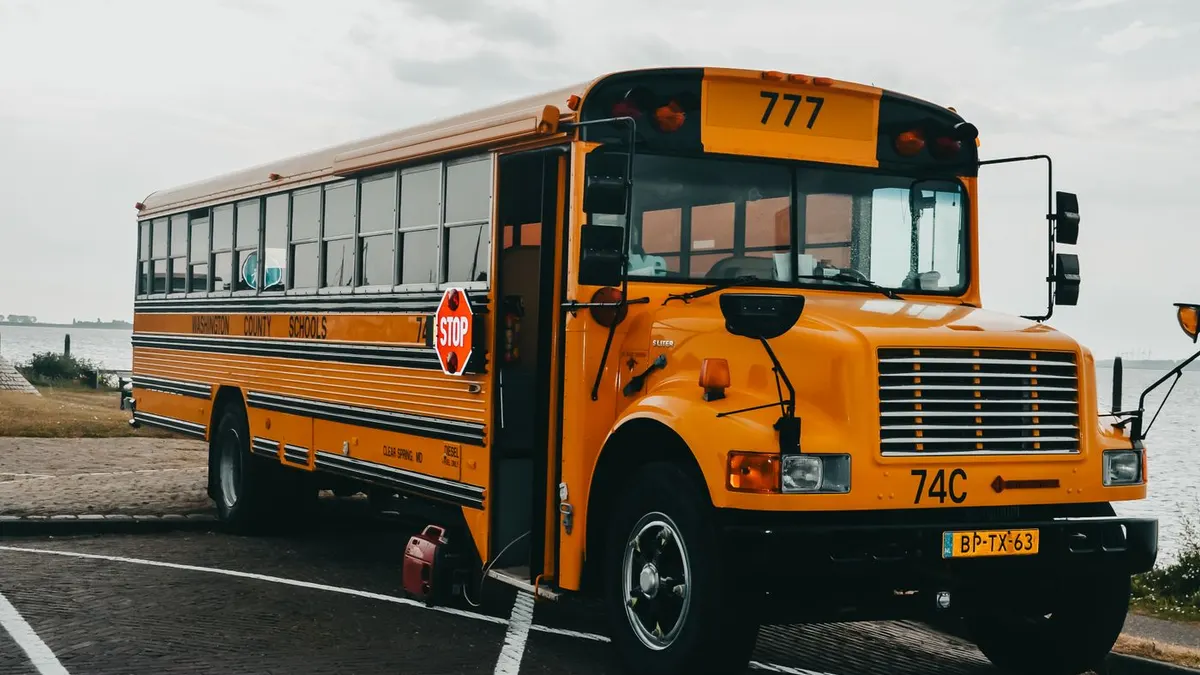
Calculating GPS tracking ROI for Indian school bus fleet
2. Total Cost of Ownership
The honest total cost of school bus GPS tracking includes:
- Hardware: a GPS device per bus (one-time) — or none at all with phone-based tracking, where the driver's phone becomes the tracker.
- SIM card: a monthly data charge for each hardware device.
- Software subscription: a monthly fee per bus, depending on the features you choose.
- Installation: a one-time labour charge per vehicle for hardware trackers.
- Onboarding and training: Often included; if not, a one-time charge.
For a 20-bus fleet, the total depends on the number of buses, whether you need hardware, and the features you choose — ask for a written quote that lists every one-time and monthly item.
3. Tangible Savings: Fuel & Routes
GPS tracking generates measurable savings in three areas:
Fuel savings: Fraud detection and route optimisation stop fuel losses and cut wasted kilometres. For a 20-bus fleet, fuel is one of the largest monthly costs, so this is usually the biggest single saving.
Overtime reduction: GPS-verified trip logs eliminate inflated overtime claims. Across 20 drivers, even a modest saving per driver adds up every month.
Maintenance reduction: Better driving behaviour (monitored speeds, no harsh braking) reduces maintenance frequency, lowering the yearly service cost of every bus.
Taken together, the tangible savings for a 20-bus fleet typically outweigh the monthly tracking cost.
School bus tracking cost and value analysis for Indian schools
4. Intangible Benefits with Real Value
These don't appear on a balance sheet but have real financial implications:
- Reduced parent complaint calls: Every "where is the bus?" call takes staff time. When parents can see the bus live, far fewer of these calls come in, freeing up hours of staff time every month.
- Student retention: Parents who feel their child is safer are less likely to move schools. Every student retained means several years of fee revenue preserved.
- Admissions advantage: In competitive school markets, GPS tracking is increasingly a deciding factor for new admissions.
5. ROI by School Size
| Fleet Size | What Drives Cost | Main Savings | Net Year 1 |
|---|---|---|---|
| 5 buses | Few buses; phone-based tracking avoids hardware | Fuel, fewer parent calls | Positive (modest) |
| 10 buses | Subscription per bus + chosen features | Fuel, overtime | Positive |
| 20 buses | Subscription per bus + chosen features | Fuel, overtime, maintenance | Clearly positive |
| 50 buses | Subscription per bus + chosen features | Fuel, overtime, maintenance | Strongly positive |
6. Risk Reduction Value
A single school bus accident in India can be extremely costly in legal settlements, medical costs, and reputational damage. GPS tracking that prevents even one accident over 5 years justifies the entire cost of ownership for most school fleets.
7. Parent Willingness to Pay
Here's the simplest path to GPS ROI with zero school budget impact: collect a small monthly transport technology fee from each bus student. For a school with 500 bus students, even a modest fee is enough to cover the GPS subscription with margin. Explain the benefit clearly before introducing it, since parent acceptance depends on it.
8. Our Simple ROI Calculator
Want to calculate your school's specific ROI? Here's the formula: (Monthly fuel bill × your expected fuel saving, using a conservative percentage) + (Monthly driver overtime saved) − (Monthly GPS subscription). If this number is positive, GPS tracking pays for itself from the first month.
Frequently Asked Questions
Is GPS tracking a cost or genuinely an investment for schools?
How quickly does GPS tracking typically pay for itself?
Does ROI improve or worsen for smaller schools with fewer buses?
Can schools pass the tracking cost on to parents without it becoming a burden?
DVM Techno Team
School transport technology experts based in Haryana. We help Indian schools implement GPS tracking that actually works.
Related Articles
Why School Bus Tracking is Critical for Child Safety in India [2026]
School Bus Accidents in India: 7 Failure Scenarios & How Tracking Prevents Them
CBSE School Bus Safety Norms 2026: Is Your School Compliant?
Ready to Make Your School Buses Safer?
DVM Techno's SchoolTrack GPS system gives every parent live bus location on WhatsApp — no app install needed.