

Quick answer
Children get off at the wrong bus stop mainly because of driver distraction, no attendant on board, young children's confusion, new routes or substitute drivers, and overcrowding. GPS tracking with stop confirmation prevents it: parents get a WhatsApp alert when the bus is 500 metres from their stop, can watch it live, and the admin is alerted if a bus skips a stop's geofence.
- Wrong-stop drop-offs are under-reported because schools rarely document them, yet a child alone at an unfamiliar stop faces traffic, strangers and weather within minutes.
- CBSE's transport precautions call for a qualified attendant on every school bus, but many vans still run with only a driver.
- Phone-based tracking can go live the same day: install the driver app, map the stops, and send parents their tracking link on WhatsApp.
June 18, 20265 min readSchool Transport
1. How Often Does This Actually Happen?
Wrong-stop dropoffs are a common — and under-reported — school transport incident in India. Schools are reluctant to document them because they reveal a systemic failure. But parents share these stories constantly in school WhatsApp groups.
Because schools rarely record them, it is hard to say how often they happen. But in a school running several buses with dozens of stops, the chance of a child being dropped at the wrong stop at some point in the year is real — and each incident has the potential to seriously harm a young child.
2. The Top Reasons Children End Up at the Wrong Stop
- Driver distraction: Managing 40 children while driving is cognitively overloading. A stop can be skipped or confused without the driver even realising.
- No attendant on board: Many school vans operate with just the driver, even though CBSE's transport precautions, 2012 call for a qualified attendant on every school bus. No one is watching which children alight where.
- Child confusion: Young children — especially Classes 1–3 — can easily be confused by a change in the bus route, a substitute driver, or another child telling them the wrong stop.
- New routes or substitute drivers: A driver unfamiliar with the route makes errors that a regular driver wouldn't.
- Overcrowding: When buses are overcrowded, it's nearly impossible to track which child is at which stop.
3. What Can Go Wrong in 15 Minutes
A 6-year-old child alone at an unfamiliar bus stop for 15 minutes faces: traffic danger (attempting to cross roads to find a familiar landmark), stranger contact, weather exposure (in extreme heat or monsoon conditions), and escalating panic that can lead to dangerous decisions like running.
Most Indian bus stops are not enclosed or supervised. There is no safety net between the bus door and the child's home front door.
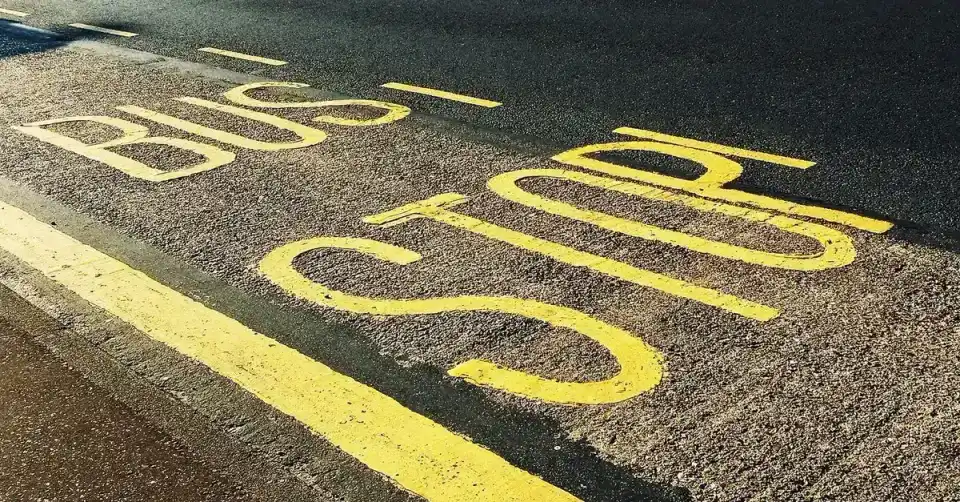
4. The Parent's Experience: Fear and Helplessness
When the bus arrives and your child isn't on it, and you have no way to reach the driver or know where the bus currently is — the experience is one of absolute helplessness. Parents report calling the school, the driver (who may not answer while driving), other parents, and sometimes police — all simultaneously — in those first terrifying minutes.
This anxiety is entirely preventable with simple technology that most schools have not yet adopted.
5. How GPS + Stop Confirmation Fixes This
SchoolTrack provides three mechanisms to prevent wrong-stop dropoffs:
Mechanism 1 — Parent alert at 500m: When the bus is 500 metres from a child's designated stop, the parent receives a WhatsApp notification. The parent can then be at the stop, confirm the child alights correctly, and the driver knows someone is watching.

Mechanism 2 — Live location for parents: The parent tracking link shows the bus in real-time. If the bus drives past your stop without stopping, you know immediately — not 20 minutes later when the bus reaches its terminus.
Mechanism 3 — Admin dashboard alerts: The school admin can set geofence zones around each stop. If the bus doesn't pause within a stop's zone during the expected timeframe, the system flags it.
6. Implementation in 5 Simple Steps
- DVM team installs the driver app on the driver's existing Android phone (10 minutes)
- School admin receives dashboard login and configures all stops on the map
- 500m arrival alerts are configured for each parent's registered WhatsApp number
- Parents receive their personal tracking link via WhatsApp
- Go live — same day or next morning run
Cost: one affordable monthly plan for the entire school fleet — call for current prices. No hardware. No vehicle modification. No lengthy onboarding. The same afternoon you decide to implement tracking, your first bus can be live. The school gate matters too: a planned drop-off and pick-up zone, with separate bus bays and staggered dismissal, keeps children from boarding the wrong bus in the rush. Our school drop-off zone planning guide covers this step by step.
Sources
Frequently Asked Questions
How often do children actually get off at the wrong bus stop?
What are the most common reasons children end up at the wrong stop?
What can go wrong in the window right after a wrong-stop dropoff?
How does GPS with stop confirmation actually prevent this?
DVM Techno Team
School Bus Tracking Software experts based in Jhajjar, Haryana. SchoolTrack — India's most affordable GPS tracking solution for schools. No hardware, no setup fee, 24-hour go-live.
Related Articles
SchoolTrack — India's Most Affordable School Bus GPS
No hardware cost. No setup fee. 24-hour go-live. The driver's phone becomes the GPS tracker.